
When I was a kid, I spent hundreds of hours scooping fish out of our creek with a bucket. In the process, I figured out there were biggish minnows that survived when brought home and dumped in my stagnant goldfish pond, smaller minnows with black stripes that couldn’t hack the lower oxygen levels of a pool, vertically flattened fish that someone told me were baby bluegills, and weird sculpins that sat on the creek bottom and lived much longer than the others when removed from water.
(Yes, I was a cruel child.)
When I started trying to ID the fish in creeks near me three-plus decades later, I was expecting to find four species max. Over the last two weeks, I’ve instead IDed double that number, have learned a lot about what they do underwater when I’m not chasing them down with a bucket, and invested in an awesome field guide. But first…
How do you find fish in creeks?
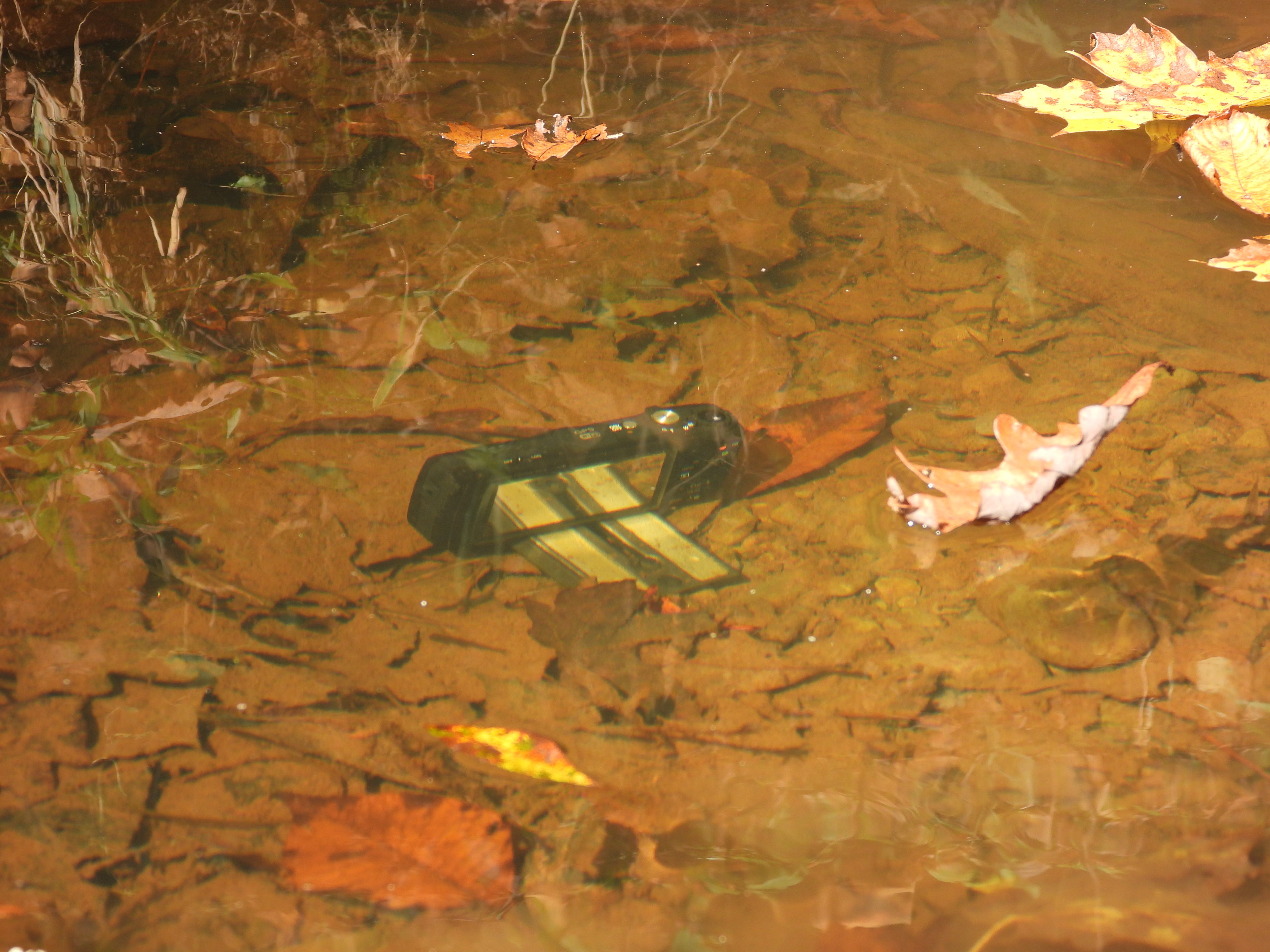
The traditional methods involve netting (or shocking) fish out of the water, but I wanted to see what their lives were like in situ. To that end, I started out snorkeling… only to find that process very hit or miss (and cold as the season progressed).
Enter an idea I didn’t expect to work yet did:
Step 1: Look for fish. I skipped this step at first and had a 33% success rate. After starting to wander along the creek to see where the fish were actually hanging out before sampling, my success rate went up to near 100%.
Step 2: Screw a cheap tripod-plate to the bottom of my underwater camera for stability. Change the Settings>Video>Video Bit Rate to Fine (so the images will be good enough for screenshots). Start the video feature while the camera lens is in the water but the screen is out of the water (because otherwise the screen silvers and you may end up wasting your time on out-of-focus or even not-recording sessions). Then carefully place the camera pointing at where the fish were (before they swam away), weighing down the tripod plate with a rock or two if the current is strong. Direct sunlight is a boon but not absolutely necessary.
Optional: Stir up the bottom just a little in front of the camera. On the one hand, this can often attract fish who come hunting in the cloud. On the other hand, this will make the water muddier and your footage less clear.
Step 3: 18 minutes later, the video has ended so you can take your camera out of the water. My batteries will manage two to three drops like this, so it’s worth picking another spot, preferably in a slightly different habitat (think pools, riffles, and overhang hiding spots), then repeating steps 1 through 3.
Step 4: Back home, open the video in an editing program. (I run Linux and use Kdenlive, so if you use more conventional software the following details might not be spot-on for you.) Scan through until you see a fish, right-click on the image, then click “extract frame.” This will give you a much higher-quality image than a screenshot. The results still aren’t glamour shots, but they’re good enough for ID.
Step 5: Upload all the fish to inaturalist, where a vibrant ID community often provides IDs within 24 hours.
Not willing to invest all that effort? The video below includes a bunch of footage from Forked Run State Park with the most boring bits compressed or removed. Watch along and see how chill the fish get within a minute or two of having the camera placed in their habitat, then notice the few times I pulled out the camera early based on scared fish zipping in all directions.
What have I learned?
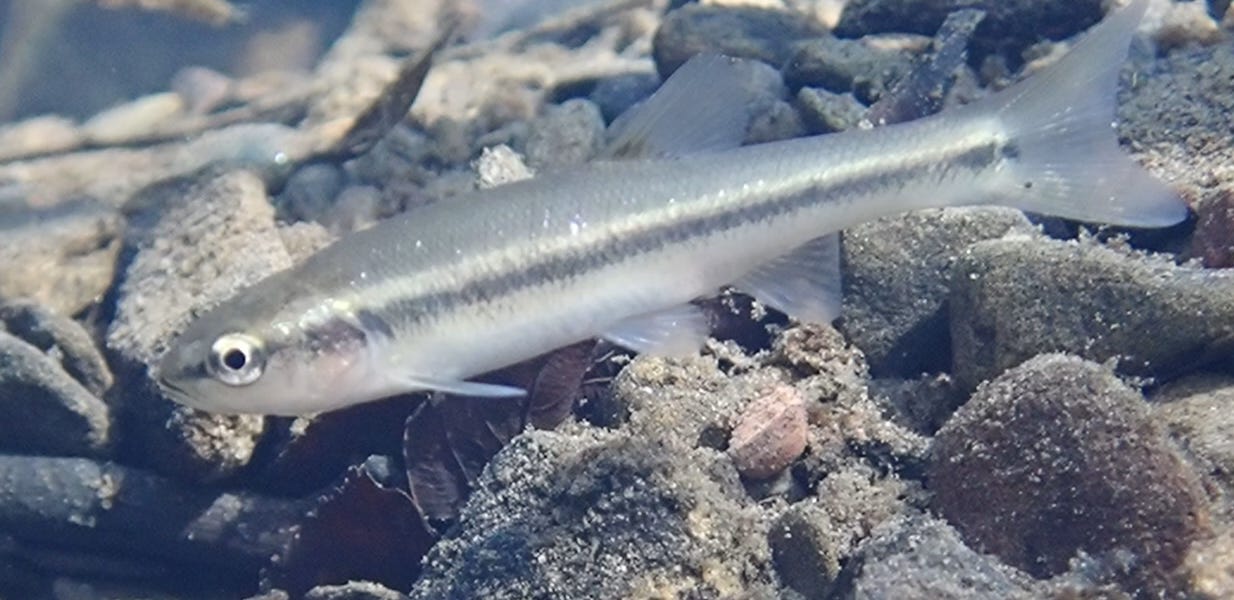
Those big, fast, pool-agreeable fish were probably Creek Chubs. In my videos, this species flits in and out of the frame quickly, and they seem able to handle both stagnant conditions and life further upstream better than many other fish. They also look very variable (losing their black line as they age), so I’ve been starting to ID them based on behavior rather than visuals.


Those little, black-striped, sensitive fish I saw as a kid…could be almost anything, even young Creek Chubs! So many creek fish have a stripe, possibly as a way to break up their silhouette and avoid predators.
But if you keep sampling and are lucky, you might notice that some of the larger fish actually have maroon stripes (male Western Blacknose Dace, right) or two stripes (Southern Redbelly Dace, left).
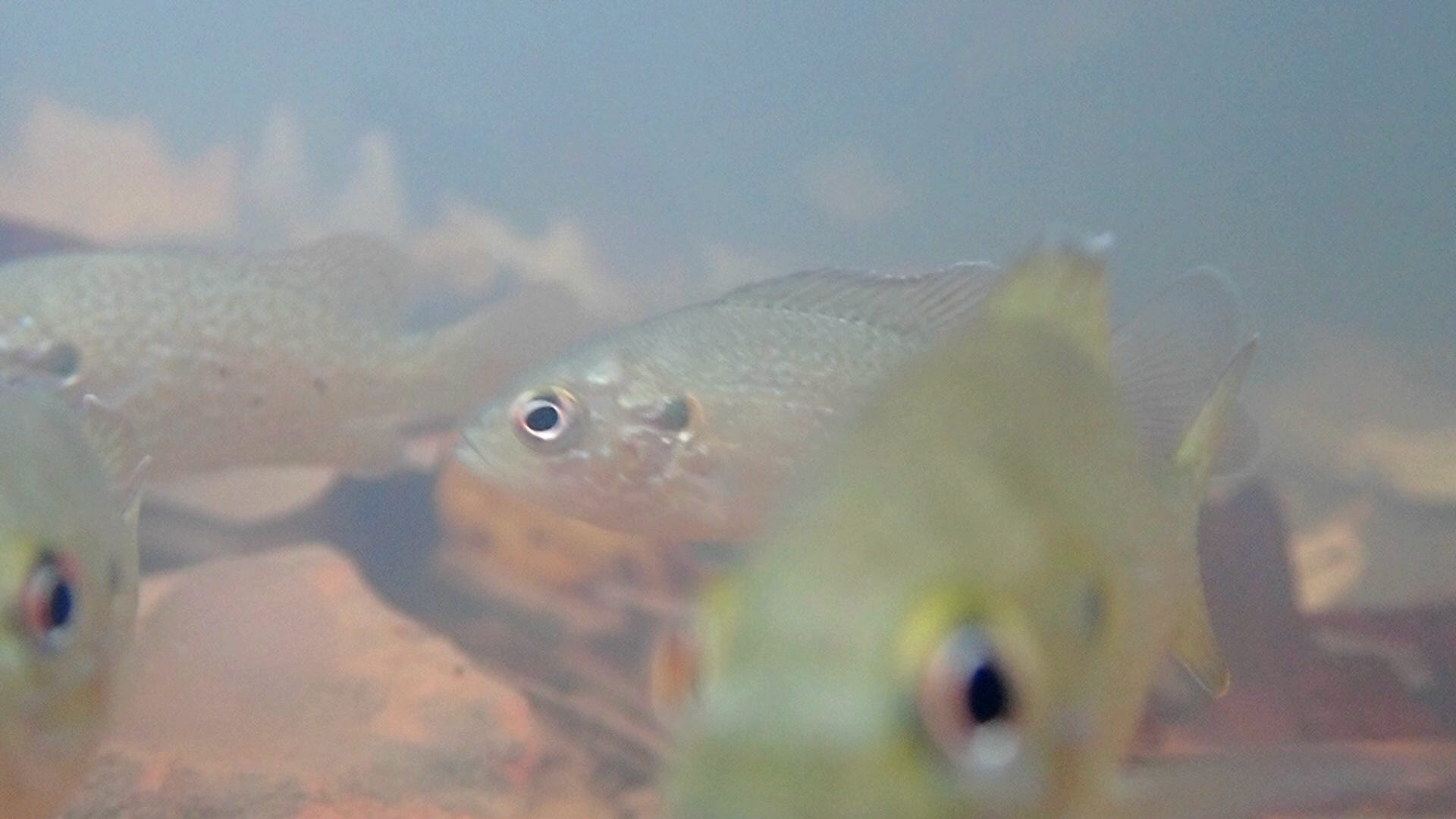
Then there are the sunfish (the vertically flattened ones), not all of which are bluegills. The ones above are Green Sunfish, which handle muddy water better than most.
In addition to their shape, I’ve noticed that most sunfish are really flirty with the camera. They typically swim up so close, in fact, that my camera struggles to focus on them! My current hypothesis is that they’re territorial and think the camera lens is reflecting back an enemy fish, the same way a cardinal might obsess over his reflection in your window. But please correct me if you think I’m wrong!
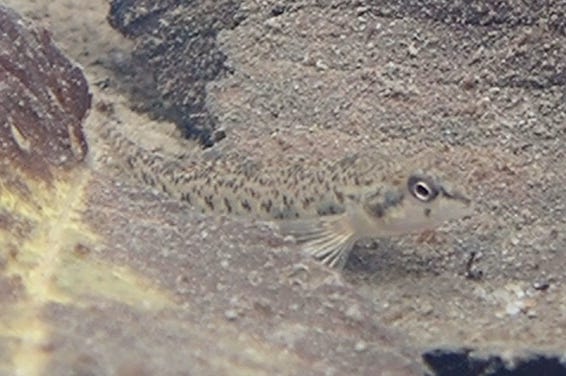
Finally, while I haven’t seen any sculpin yet, darters are a different bottom-dwelling category that seem common here. I often don’t even see darters when I put down the camera, but scanning footage often turns at least one up.
Since darters don’t have swim bladders, they naturally rest motionless on the stream bottom until they dart out to grab tiny critters for lunch. Perhaps their tendency to sit so low is also why most (except the Johnny Darter pictured above) are very sensitive to sedimentation?
Regardless, most darters (and many other creek fish) turn very brilliantly colored during breeding season. Something to look forward to in the spring!
Digging deeper
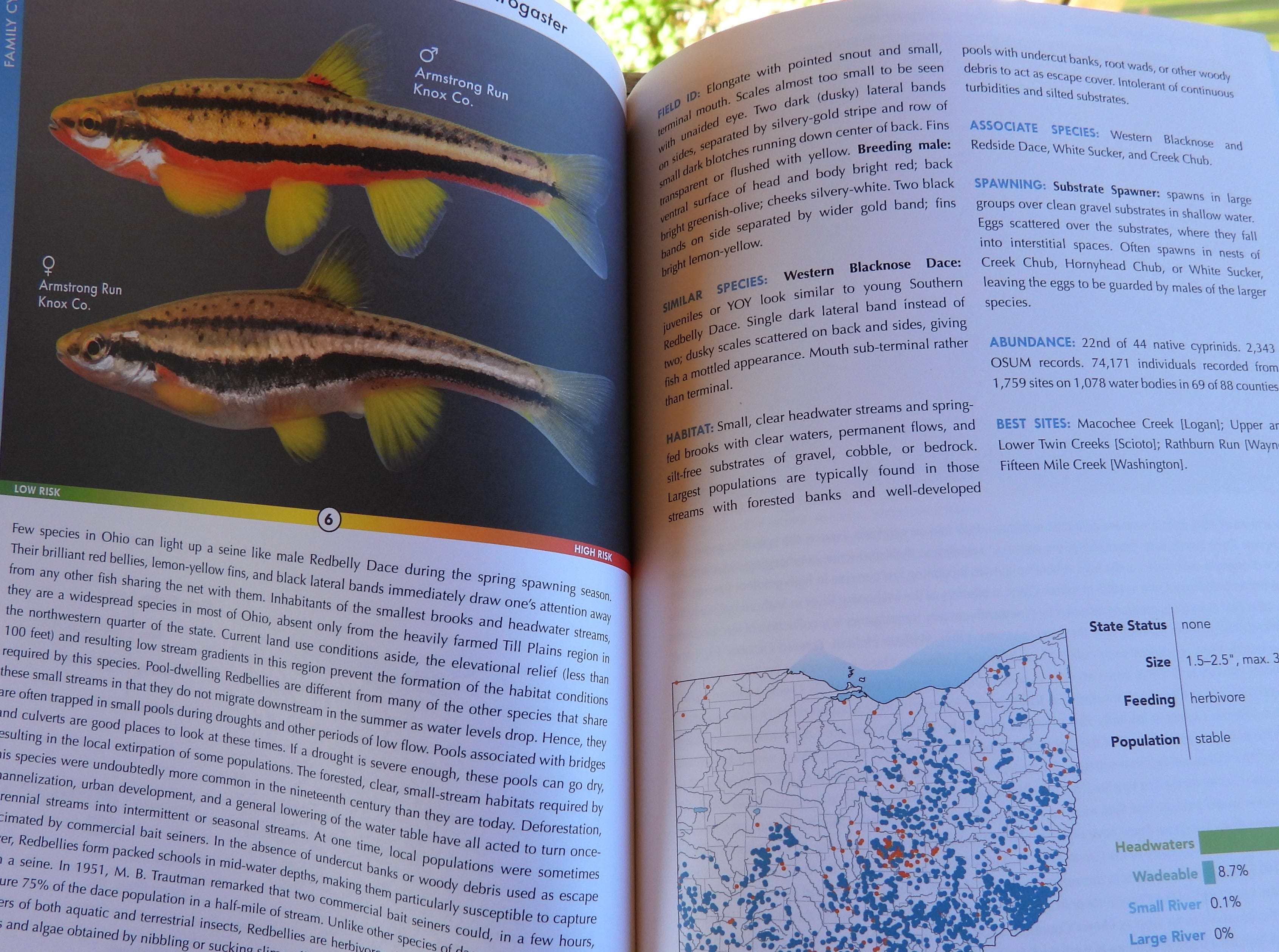
I’m still at the bare beginning of understanding creek fish, so I figured it was time to invest in a field guide. And luckily, there’s an Ohio version that I adored the moment my copy arrived.
A Naturalist’s Guide to the Fishes of Ohio includes every species in the state with information on range, habitat, and an in-depth description. While I’d like more pictures (especially of juveniles and non-breeding coloration), the images that are present have definitely helped me start to get a handle on what I’m seeing. If you live in my state and are interested in non-game fishes, the paperback version is a must-buy.
Affiliate disclosure: The links in this post are affiliate links, which means I’ll get a few pennies if you click and buy. But I only recommend items I use and love!